

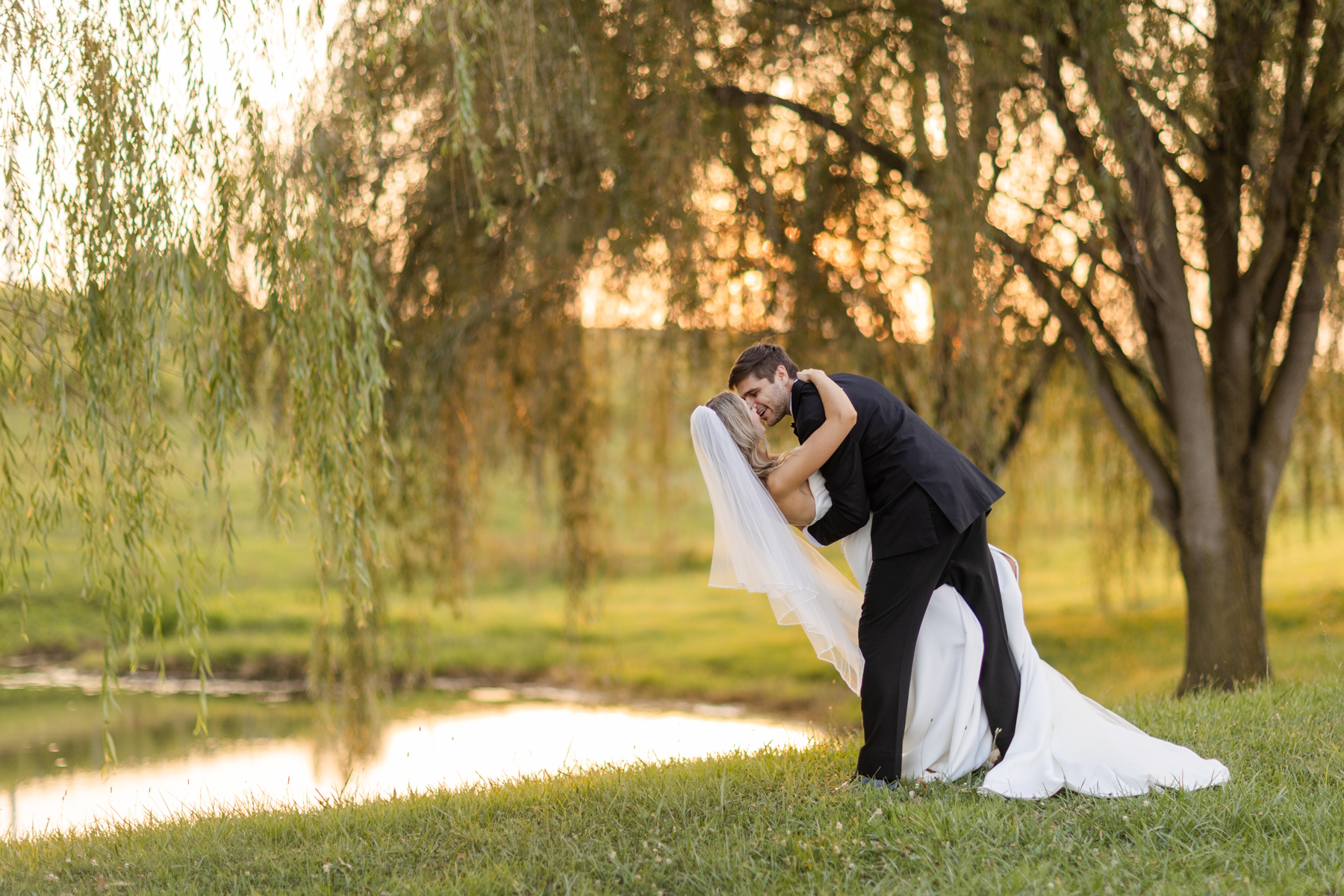
How to Create a Wedding Day Timeline: A Virginia Wedding Photographer’s Guide
A great wedding day timeline is the quiet secret behind the days that feel calm, joyful, and unhurried! It’s also the secret to actually getting the wedding photos you really wanted. Or the wedding you wanted, to be honest. I’m Jo, a Virginia wedding photographer, and building timelines with couples is one of my favorite parts of the job. Whether you’re planning a classic wedding near Charlottesville, a winery ceremony in the Blue Ridge, or a Catholic wedding with a reception across town, this guide walks through the decisions that shape your day, in the order I use with my own couples.
What Makes a Great Wedding Day Timeline
A great timeline starts with knowing the sunset time, so your portraits happen in beautiful light. It builds in transition time between every event, including drives, outfit changes, and a relaxed 30 minutes before your ceremony. It accounts for what every vendor needs, from hair and makeup start times to photo and video setup and floral installations. It fits your ceremony length and traditions, and it leaves breathing room for you to be present. Everything below is how I put those pieces together.
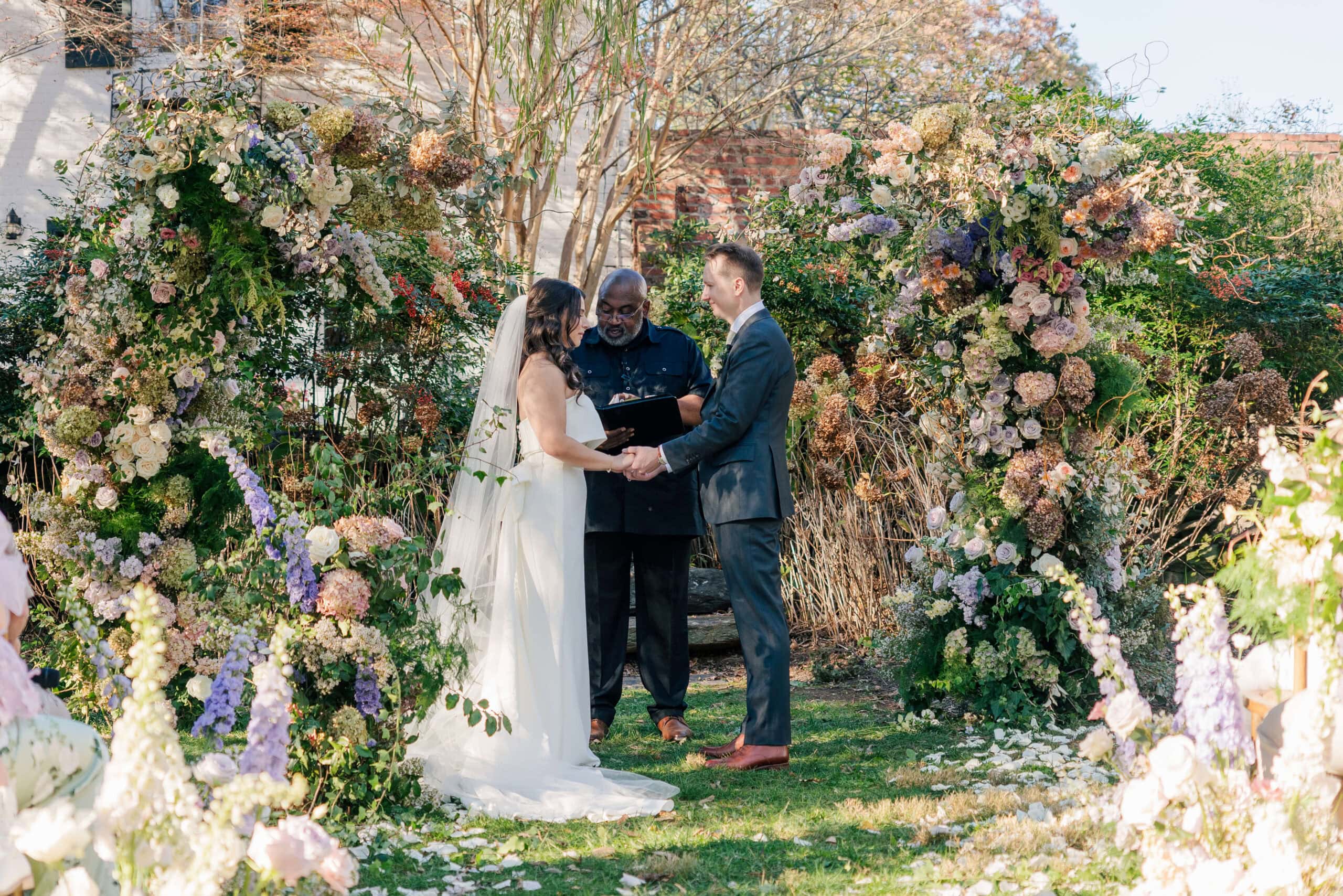
How To Choose Your Wedding Ceremony Time
Sunset is the anchor of my whole timeline, because light decides how your photos look. Search for the sunset time for your date and venue, and remember that it moves a lot through the year. Most ceremonies end up starting about 3 hours before sunset. In Virginia, it can be about 4:45 PM in late fall and well past 8:00 PM in summer. In my experience, November ceremonies often start around 3:00 PM, October around 4:00 to 4:30 PM, and summer around 5:00 to 6:00 PM.
Instead of picking a ceremony time first, imagine this: choose when you want your sunset portraits, then back up. For most weddings those happen at the end of dinner. Dinner starts about 45 minutes before that, cocktail hour runs about an hour before dinner, and the ceremony ends as cocktail hour begins. With a 7:30 PM sunset, that points to a 4:30 PM ceremony.
A few quick rules:
- Keep dinner at 5:00 PM or later. No one wants a full meal at 3:30 PM.
- Avoid starting your ceremony within about 20 minutes of sunset, or family and couple portraits will happen in the dark.
Set your ceremony time early, since invitations and vendors depend on it, and ask your photographer to check your date first. Here Comes the Guide notes that ceremonies usually run 30 to 60 minutes. I plan 20 to 30 minutes for a contemporary ceremony, and 90 minutes for a mass.
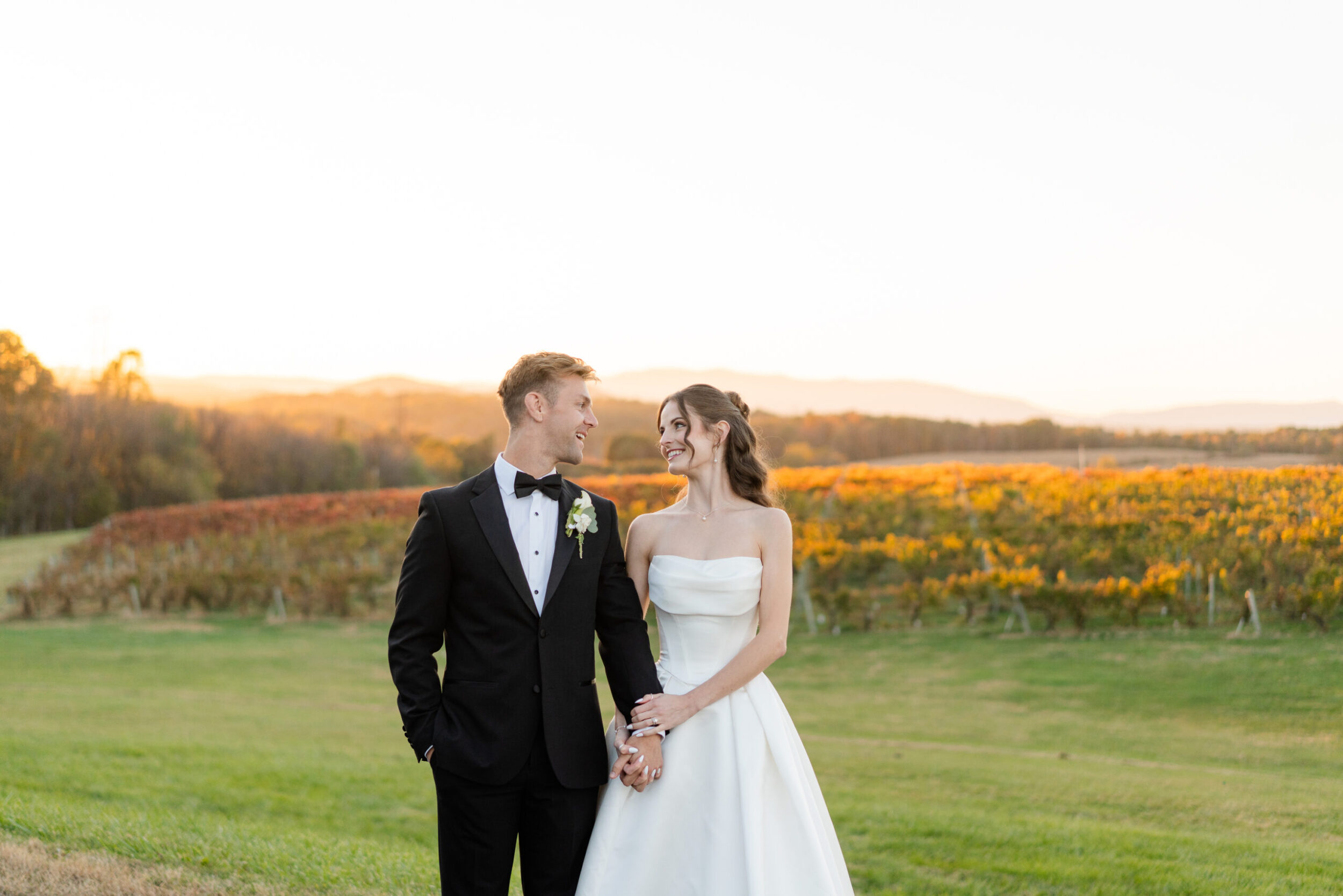
When to Schedule Golden Hour Wedding Photos
Golden hour is the stretch before sunset when the light turns soft, warm, and flattering. The Knot’s golden hour experts put it at roughly 30 to 90 minutes before sunset, usually about an hour. In mountain areas it can start nearly 90 minutes early, because the sun slips behind a ridge before it reaches the horizon. That’s worth remembering for a Blue Ridge or Shenandoah wedding!
The last 20 minutes before sunset are the best of the best, and you only need 15 to 20 minutes of it, as the pros at Polka Dot Wedding also suggest. Where it fits depends on the season:
- Late fall and early spring: the end of cocktail hour doubles as your sunset photos.
- Most weddings: you slip out at the end of dinner, before speeches begin.
- Summer: you step out for about 15 minutes during open dancing.
I never schedule portraits past dark, and it helps to ask your planner to build a natural break for guests around that time.
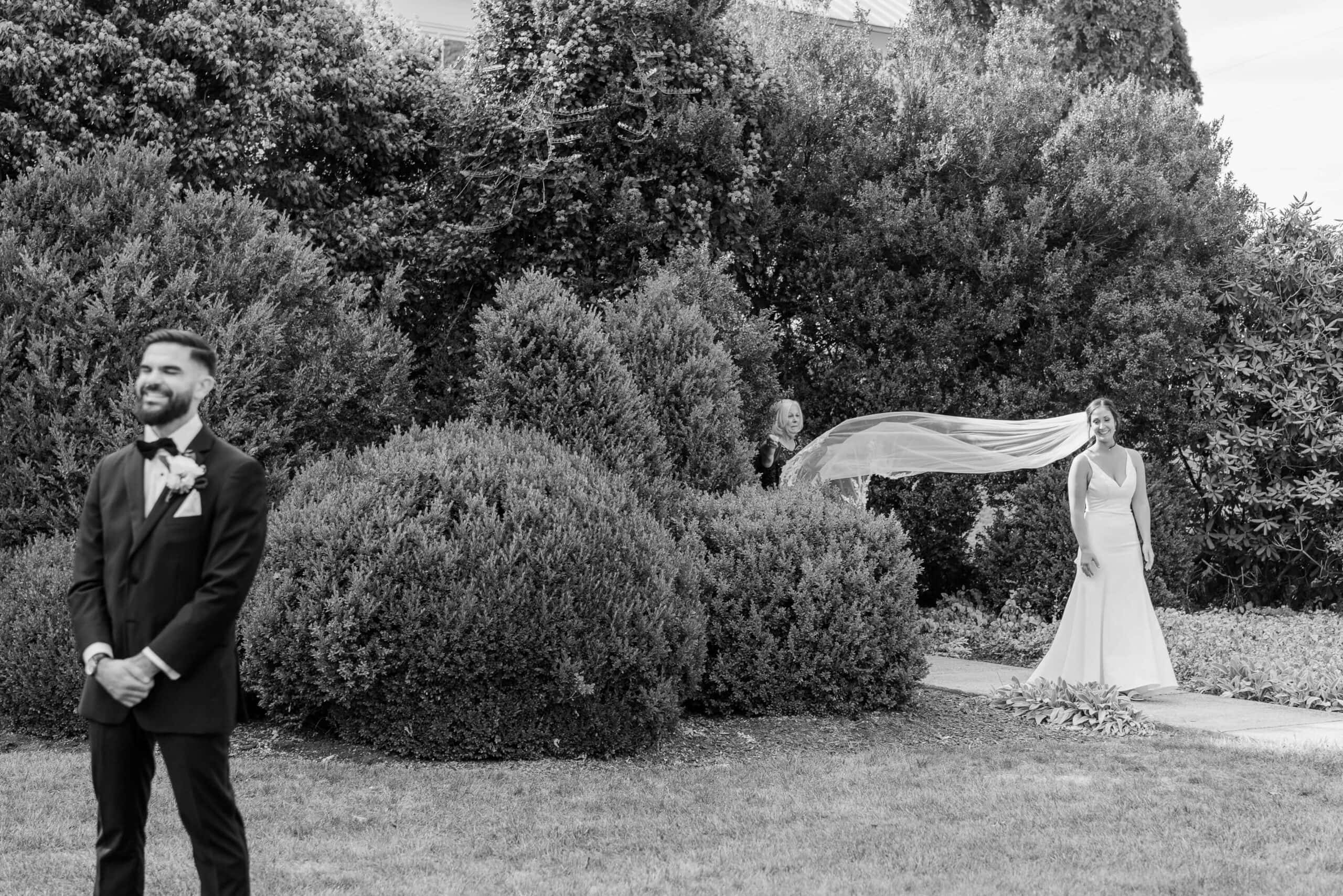
Should You Do a First Look (or Not)? How It Changes Your Wedding Timeline
A first look takes about 20 to 30 minutes, including private vows and couple portraits, and it moves most of your portraits before the ceremony. Wedding party photos (about 20 minutes) and family photos (10 to 15 minutes) can happen before guests arrive, so cocktail hour is yours to enjoy.
Without a first look, cocktail hour holds three blocks of 15 to 20 minutes for family, wedding party, and couple portraits, so it works best with a little extra time built in. We still photograph each partner’s side of the wedding party separately before the ceremony so you don’t see each other, about 15 minutes per side.
The Knot’s wedding pros list calmer nerves, private time, and a shorter photo window after the ceremony as the benefits. They list a lost altar reveal, an earlier start, and cultural or religious traditions as the drawbacks. If a first look isn’t for you, there are sweet alternatives like exchanging letters. Or save it all for the ceremony! The best choice is the one that fits your relationship.
Getting Ready Timeline: Hair, Makeup, and the Last 30 Minutes Before Your Ceremony
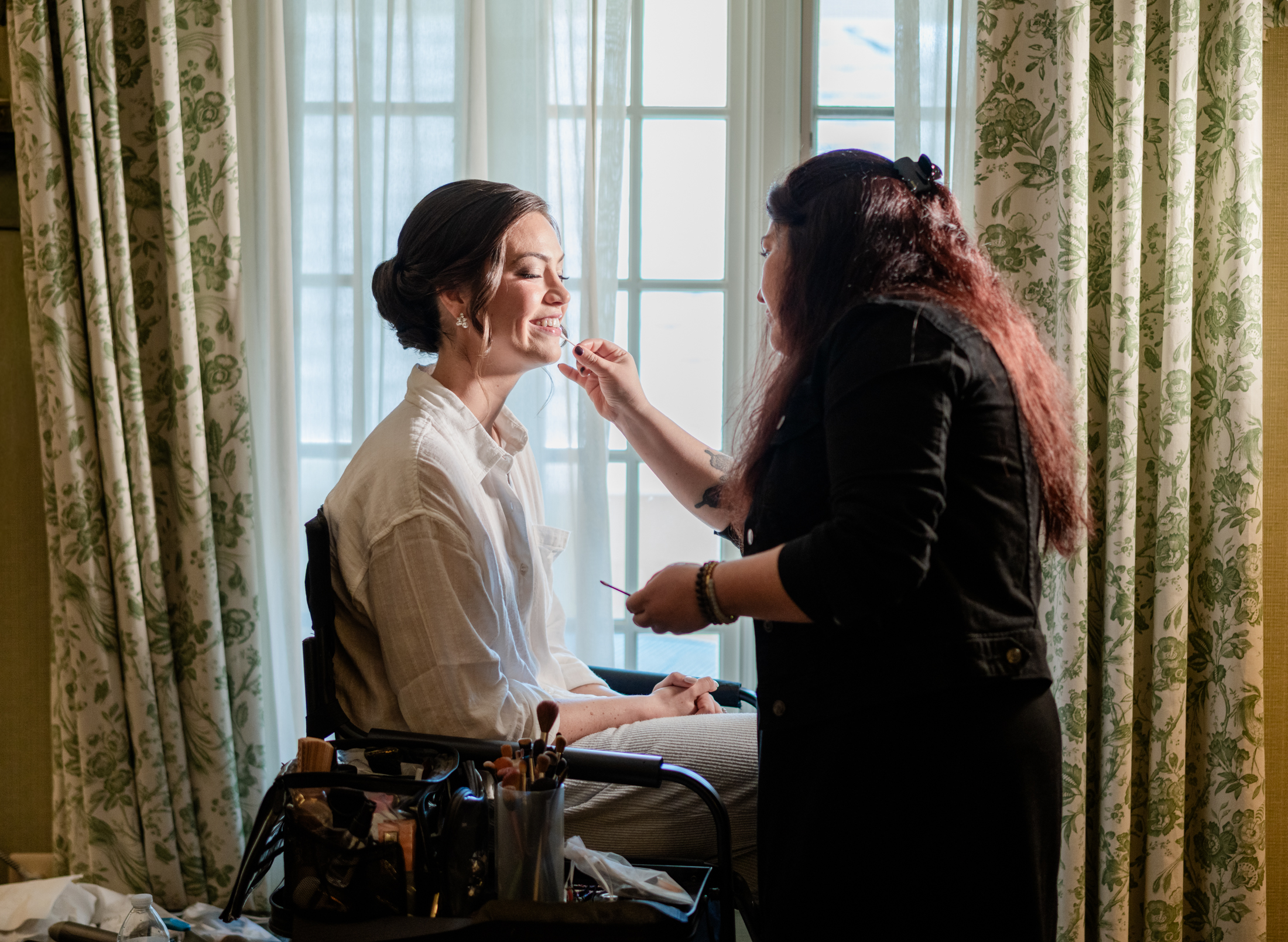
Your start time is set by hair and makeup. Most artists will plan about 45 minutes of hair and 45 minutes to an hour of makeup per person. The last person finishes about 30 minutes before the final outfit (wedding dress, tux, saree, whatever your fashion is!) goes on, and the main person finishes second to last so their look stays fresh. Two artists can overlap their appointments, which shortens the morning. Details are always photographed first, so how much time you want for them (anywhere from 15 minutes to an hour) shapes my arrival time. Ask your venue when the getting ready space opens, and plan a hotel if your team needs to start earlier.
Leave the last 30 minutes before the ceremony mostly empty. Amy and Jordan Photography recommends this cushion too, since guests tend to arrive about 30 minutes early. It’s your time to rest and touch up while your photographer captures the ceremony space untouched. They also suggest having the reception room fully set about 30 minutes before the ceremony, so it can be photographed before guests arrive.
Travel Time Between Getting Ready, Ceremony, and Reception
Travel is where good timelines go sideways. I take the drive time and add 10 minutes, 5 to get everyone into cars and 5 to transition on the other end. WeddingWire recommends at least a 15 minute buffer whenever transportation is involved, and Zola’s sample timeline allows about 30 minutes from the getting ready location to the venue.
If your ceremony and reception are in different places, Easy Weddings notes that long gaps leave guests restless, so keep drinks and snacks flowing while photos happen.
Longer Ceremonies, Catholic Mass, and the Catholic Gap
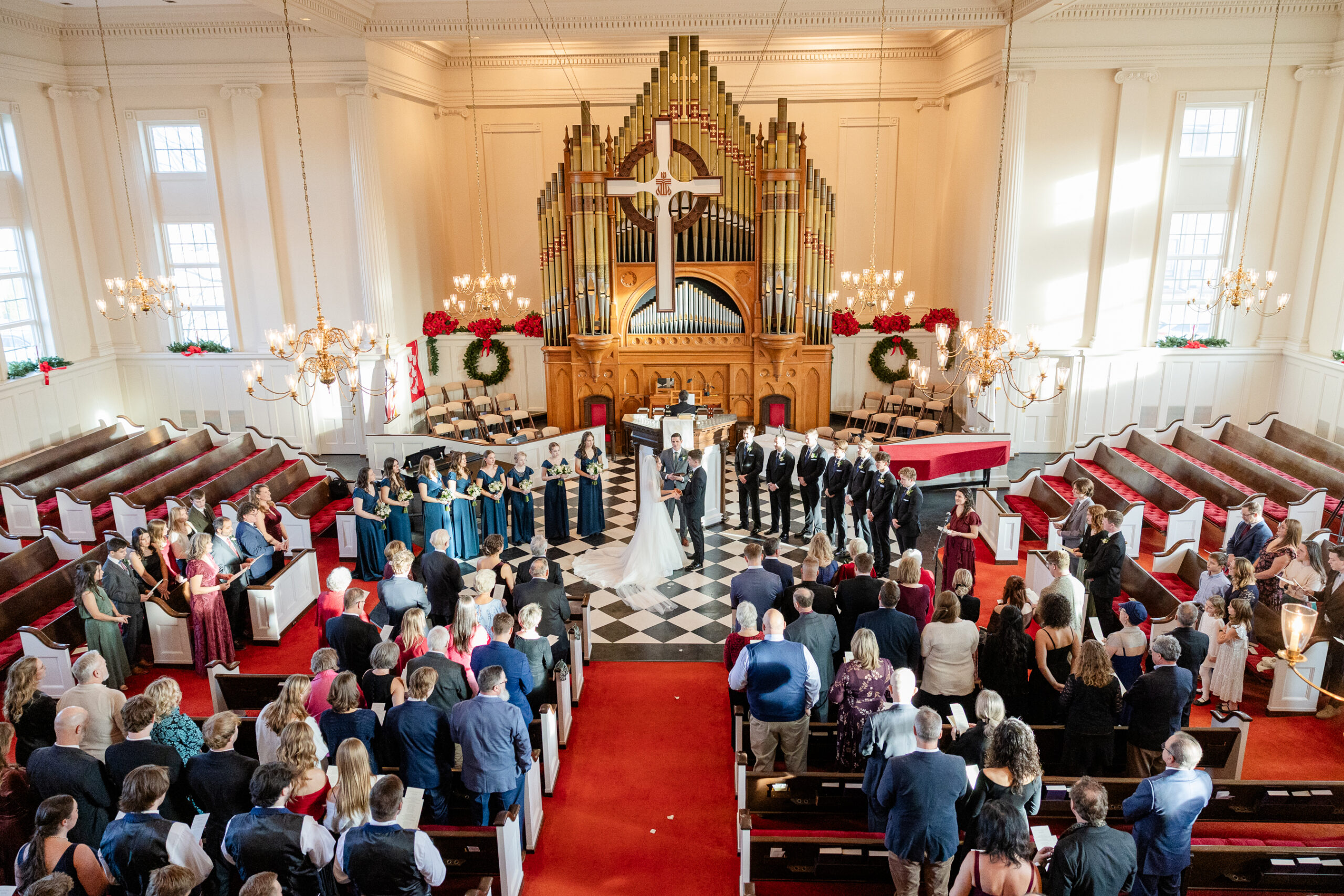
Ceremony length changes everything after it. I plan 20 to 30 minutes for a contemporary ceremony, about 45 minutes for a partial Catholic Mass, and 1 hour 15 minutes to 1 hour 30 minutes for a full Mass, so ask your officiant for the exact length.
A Mass often comes with the Catholic gap, the stretch between the ceremony and cocktail hour. WeddingWire notes that this is common with full Mass weddings, which usually start earlier in the day. We use part of the gap for family, wedding party, and couple portraits, and the rest is a real break for you. A first look is usually skipped for these weddings.
Share the schedule on your wedding website with ideas for what guests can do nearby, and explain what a Mass involves for guests who aren’t Catholic. Other traditions, like a Jewish sunset ceremony, have timing needs of their own, and our timelines can be tailored for those too.
Cocktail Hour, Dinner, and Reception Timeline Tips
- Cocktail hour: about one hour, then about 15 minutes for seating and entrances.
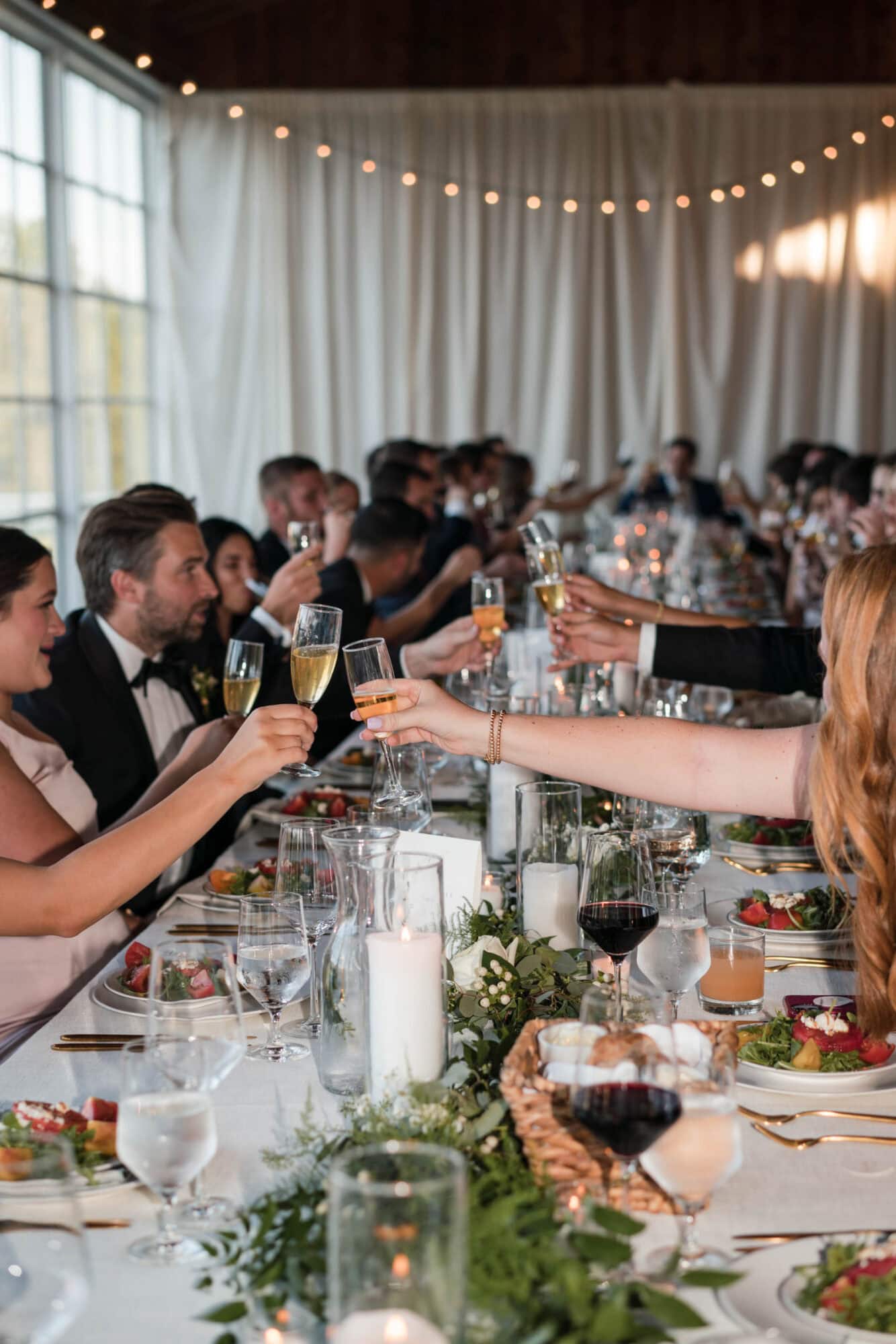
- Dinner: allow about 45 minutes before toasts so everyone can eat, including your vendors. If you have video, that window also gives your videographer 10 minutes or so to set up lights and mics for toasts.
- Toasts, cake cutting, and the start of open dancing: these fit in about 30 minutes, since toasts usually take about 15.
- Open dancing: typically 2 to 3 hours total. Receptions usually run 4 to 5 hours in total, according to Here Comes the Guide, so check your venue’s curfew.
Sample Wedding Day Timeline With a First Look
Here is an example from my timeline guide: 8 hours of coverage, two photographers, and a 7:00 PM sunset. Swap in your own sunset time and ceremony length. A no first look version is part of my guide too, and I’m happy to build one for your date.
- 1:15 PM: Details and final touches of hair and makeup
- 2:00 PM: Getting into final outfits
- 3:00 PM: First look and couple portraits
- 3:45 PM: Wedding party portraits
- 4:30 PM: Immediate family photos, 8 to 12 groupings
- 5:00 PM: Rest, retouch, and ceremony decor photos
- 5:30 PM: Ceremony
- 6:00 PM: Sunset portraits
- 6:30 PM: Cocktail hour and reception decor photos
- 7:00 PM: Sunset, then guests seated and grand entrances
- 7:15 to 9:15 PM: Reception coverage
Top Wedding Day Timeline Mistakes
- Ignoring sunset. A ceremony too close to sunset leaves family and couple portraits in the dark.
- Skipping buffer time. Weddings rarely run to the minute, so leave 30 minutes before the ceremony and a cushion at every transition.
- Underestimating travel. GPS time is not wedding day time. Add 10 minutes to every drive.
- Not structuring hair and makeup schedule. Yes, you all need assigned times. “Person 1” “person 2” etc goes awry quickly.
- Squeezing a no first look portrait list into a short cocktail hour. Family, wedding party, and couple portraits need about 15 to 20 minutes each. You typically can’t do all of those AND go experience your cocktail hour unless you extend beyond an hour.
- Forgetting what vendors need. Hair and makeup start times, photo and video setup, and a meal for your team all need real space on the timeline.
- Packing in too many family groupings. About 8 to 12 groupings takes 15 to 20 minutes, and a long list can swallow your cocktail hour.
- Not checking venue access or sharing the final plan. Confirm when the getting ready space opens, and send the final timeline to every vendor at least four weeks ahead, as Easy Weddings recommends.
Wedding Day Timeline FAQs
What time should a wedding ceremony start? Work backward from sunset. In Virginia, November ceremonies often start around 3:00 PM, October around 4:00 to 4:30 PM, and summer around 5:00 to 6:00 PM, always on the hour or half hour.
How long do wedding photos take? A first look with couple portraits takes about 20 to 30 minutes, wedding party portraits about 20 minutes, family photos 20 minutes, and sunset portraits about 15 to 20 minutes.
How much buffer time should I build in? Plan a 30 minute cushion before the ceremony and add about 10 minutes to every drive.
Can my photographer help me build my timeline? Absolutely! If you’re working with me, we build your first draft together on a Zoom call as early as our first consultation.
Build Your Wedding Day Timeline With Photography by Jo
Timelines can feel tricky, whether you’re dealing with an early sunset, a longer ceremony, a big family photo list, or a long drive between locations. I’ve seen it all, and there’s a solution for just about anything. You can play with the pieces yourself in our wedding day timeline and coverage planner, or inquire here and we’ll build your timeline together on a Zoom call. Here’s to a wedding day that feels as good as it looks!
- About the Author
- Latest Posts

Jo Mahaney is a professional photographer of PhotographyByJo.net based in Charlottesville, Virginia, specializing in wedding photography. With over eight years of experience, Jo is dedicated to creating effortless, joyful imagery that authentically captures the essence of each couple’s unique love story. She is known for her ability to create meaningful galleries filled with emotion and personal narratives. Jo is not just a photographer; she is an active supporter of her clients, providing resources and guidance to ensure a stress-free experience. From the initial inquiry call to the wedding day, Jo is transparent, open, and ready to get to know her clients to provide the best service possible. Her commitment to her craft and her clients is evident in the glowing testimonials she has received. Jo’s work extends beyond Charlottesville, covering areas such as Harrisonburg, Staunton, Lexington, Roanoke, and Richmond. She has also had the privilege of photographing weddings in various locations, including the Outerbanks, DC, Maryland, Pennsylvania, North and South Carolina, and even Spain.